


 |
|
SABIC Stock (2010) — Recovery Play or Value Trap? The Honest Investor's Guide 2026
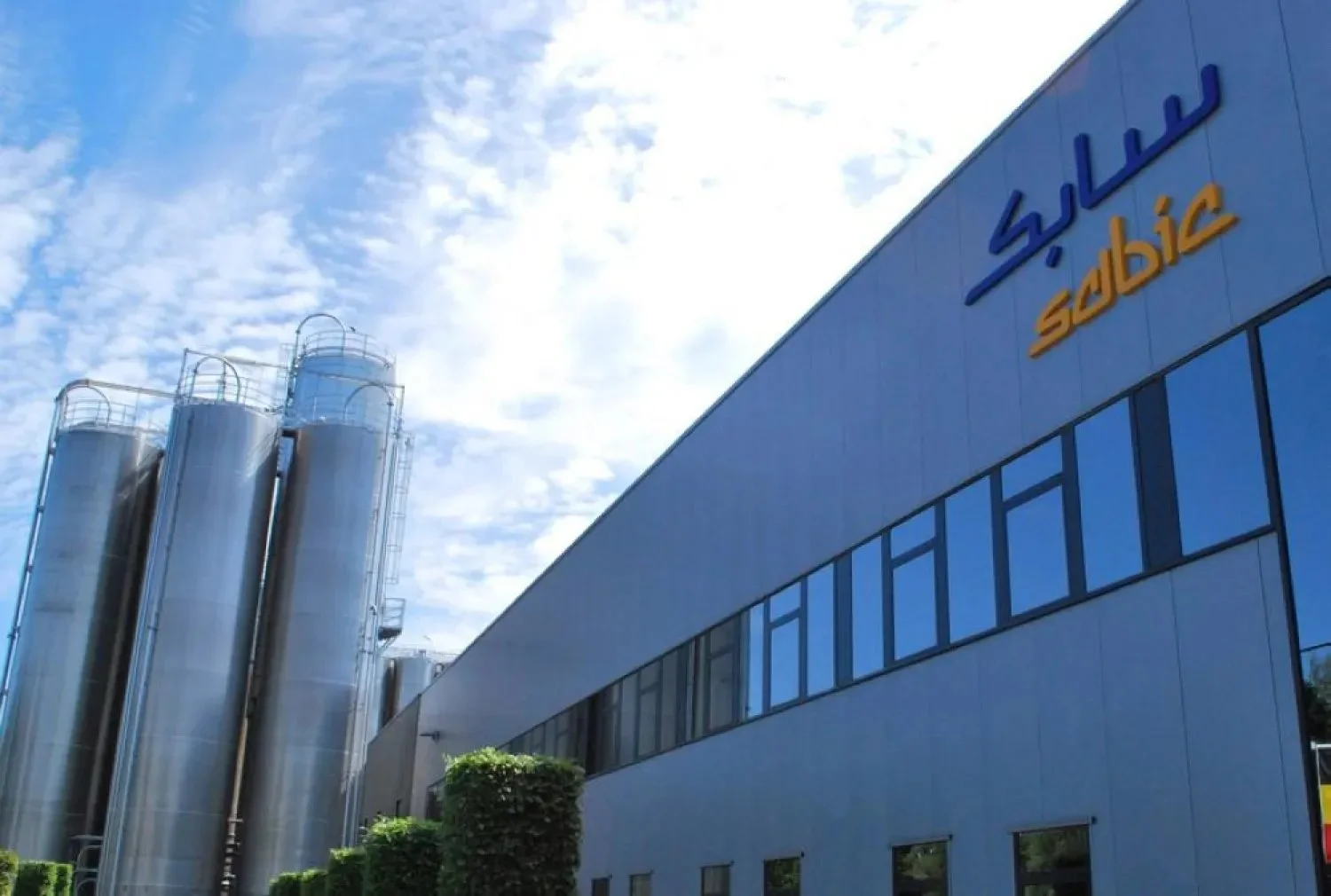
SABIC (TADAWUL: 2010) — Saudi Basic Industries Corporation — is one of the most debated stocks among investors across the UAE, Saudi Arabia, Qatar, Kuwait, Bahrain, and Oman right now. The reason is straightforward: the world's fourth-largest petrochemical company is navigating a genuine strategic transformation amid real operational headwinds, making the buy decision considerably more nuanced than banks or energy stocks. This guide does not offer a rosy picture — it delivers an honest, data-driven analysis built on the latest available information as of February 2026.
Disclaimer: This article is for educational and research purposes only and does not constitute investment advice. Equity investments carry the risk of capital loss. Please consult a licensed financial advisor before making any investment decision.
SABIC by the Numbers — What the Data Actually Shows
| Metric | Value (2025–2026) |
|---|---|
| Ticker | 2010 — Tadawul Saudi Exchange |
| Share Price (Feb 2026) | ~SAR 56.50 |
| 52-Week Range | SAR 53 – SAR 73.6 |
| Market Capitalisation | ~SAR 169.5 billion |
| EPS (TTM) | Negative (–SAR 2.29) |
| P/E Ratio | Negative (loss-making) |
| P/B Ratio | 1.05x (trading near book value) |
| Book Value per Share | SAR 51.29 (Q2 2025) |
| Dividend Yield | ~4–8.67% (varies by source and price) |
| Adjusted EBITDA Margin (Q3 2025) | 14.5% |
| Adjusted Net Income (Q3 2025) | USD 186M (+45% quarter-on-quarter) |
| Operating Cash Flow (Q3 2025) | USD 2.7B (+8% year-on-year) |
| Net Debt Position | Negative (net cash — no debt stress) |
| Analyst 12-Month Price Target | SAR 61.48 avg / SAR 78 high / SAR 52.60 low |
| Analyst Consensus (11 analysts) | Neutral |
| Next Earnings Report | 3 March 2026 |
For the live share price and latest analysis, follow the SABIC 2010 page on FxNewsToday.
1. Should You Buy SABIC Right Now? A Candid Fundamental Read
Short answer: Not a clear buy — but not a broken story either. Here is the full picture every serious investor needs before deciding:
What concerns the market:
- SABIC posted net losses in Q1 and Q2 2025 — SAR 1.2 billion in Q1 alone — driven by restructuring charges and weak global petrochemical demand
- A double cost squeeze: higher feedstock prices from Aramco (+22.8% for methane) on one side, and falling selling prices globally on the other
- Global petrochemical overcapacity is an industry-wide problem — ExxonMobil, Dow, and BASF all face identical headwinds
- Analyst consensus is Neutral, not Buy — 11 analysts, no clear conviction either way
What supports long-term confidence:
- Net cash position: No existential liquidity risk — the balance sheet is clean and the company is not under financial distress
- Adjusted profitability is improving: Adjusted net income jumped 45% quarter-on-quarter in Q3 2025 — the restructuring programme is delivering tangible results
- Strong operating cash flow: USD 2.7 billion in Q3 alone, up 8% year-on-year — the business generates real cash despite headline losses
- Fujian mega-project (USD 6.4 billion): 87% complete, scheduled for H2 2026 startup — a concrete, near-term growth catalyst with a solid Chinese customer base already in place
- P/B ratio of 1.05x: The stock trades barely above book value (SAR 51.29) — exceptionally rare for a company of this global scale and Aramco backing
- ~70% owned by Saudi Aramco: Institutional backing that significantly reduces governance and liquidity crisis risk
Bottom line: SABIC suits investors who understand petrochemical cycles and believe in a sector recovery through 2026–2027. It is not for anyone seeking quick results or guaranteed income. Follow SABIC stock analysis on FxNewsToday to track recovery signals as they emerge.
2. Building a Long-Term Position With Real Risk Management
Given the current uncertainty, the optimal approach combines patience, staged entry, and strict discipline:
- Never deploy all capital at once: Split your budget across 4–5 tranches over 6–9 months. Staged entry dramatically reduces the damage of mistiming.
- Set your first entry level at key support: The SAR 52–55 zone has been a proven historical base. Start with 25–30% of your target allocation here.
- Tie subsequent additions to actual catalysts: Add when quarterly results beat estimates, when Fujian's startup is formally confirmed, or when global petrochemical margins show a structural upturn.
- Define your stop-loss in advance: A weekly close below SAR 50 warrants a full reassessment before adding more capital.
- Set a realistic time horizon: Do not expect meaningful returns in under 18–24 months. SABIC is a recovery story — not a growth sprint.
3. Where Exactly Is the Right Price to Buy SABIC?
| Price Zone | Assessment | Suggested Action |
|---|---|---|
| Below SAR 53 | Very attractive / strong historical support | Deploy 40–50% of target allocation |
| SAR 53 – 58 | Reasonable / trading near book value | Gradual entry, 25–30% of allocation per dip |
| SAR 58 – 65 | Moderate / wait for technical confirmation | Hold off — wait for a pullback to a better level |
| Above SAR 65 | Elevated given current losses | Avoid new entries — reassess fundamentals first |
The current price (~SAR 56.50) sits in the reasonable zone, just above book value (SAR 51.29) — providing a relative margin of safety for the patient long-term investor. Follow SABIC news for any developments that shift the entry picture materially.
4. Dividend Yield Comparison — How SABIC Stacks Up Against Peers
| Company | Ticker | Dividend Yield | Payout Stability | Current Status |
|---|---|---|---|---|
| SABIC | 2010 | ~4–8.67% | Historically volatile | Losses / strategic transition |
| SABIC Agri-Nutrients | 2020 | ~5.5% | More consistent | Outperforming parent company |
| Sabic Petrochemical | 2310 | Moderate | Moderate | Facing similar sector headwinds |
| Saudi Aramco | 2222 | ~5.18% | Most reliable in region | Profitable / government-backed |
The critical distinction: SABIC's yield looks attractive on paper, but it is not guaranteed while the company is posting losses. Dividends depend on a board decision each cycle, not on a consistent earnings base. Investors seeking reliable fixed income should look at Aramco or SABIC Agri-Nutrients instead. For a full sector comparison, see Saudi stock analysis on FxNewsToday.
5. What Every New Investor Should Know Before Buying SABIC
- This is not the simplest first stock: SABIC requires an understanding of petrochemical cycles and the ability to distinguish between cyclical and structural losses — harder conceptually than investing in Aramco or Al Rajhi Bank.
- If you do enter, start small: SAR 5,000–10,000 maximum to begin while you learn the stock's rhythm and key drivers.
- Do not buy because of the headline yield alone: A high dividend yield on a loss-making stock is a warning signal, not a buy trigger.
- Understand the thesis before committing capital: SABIC is a bet on a petrochemical demand recovery and the Fujian project output reaching Chinese customers. If you believe in that thesis, enter. If it is still unclear, wait.
- News drives this stock: Any Fujian startup confirmation or EBITDA margin improvement can move the price sharply. Set alerts via SABIC's news page.
6. Regular Monthly Investment in SABIC — Does It Make Sense for Wealth Building?
Yes — with one essential condition: genuine conviction in the recovery thesis and patience of at least 3–5 years. Here is why Dollar Cost Averaging (DCA) works particularly well for SABIC at this stage:
- The stock is at a sectoral cycle trough — monthly buying accumulates more shares at historically low prices
- When the cycle turns (expected as Fujian comes online and Chinese demand recovers), your average cost will be well below the recovery price
- Reinvested dividends add compounding fuel even if payouts are lower than prior years
- Practical example: SAR 1,000/month over 36 months = SAR 36,000 spread across multiple price levels, neutralising any single mistimed entry
7. The Real Risk Map — Ranked by Actual Impact
| Risk | Impact Level | How to Manage It |
|---|---|---|
| Prolonged global petrochemical overcapacity | Very High | Cap SABIC at maximum 15% of total portfolio |
| Losses extending longer than expected | High | Only invest capital you can lock away for 2–3 years |
| Further feedstock cost hikes from Aramco | Medium–High | Track quarterly feedstock announcements closely |
| Fujian project startup delay or cost overrun | Medium | Monitor project progress updates every quarter |
| Dividend cut or suspension | Medium | Do not rely on dividends as a primary income source right now |
| China economic slowdown (key end market) | Medium | Monitor China manufacturing PMI monthly |
| Broad TASI market correction | Low–Medium | Long horizon absorbs general market volatility |
8. Hold Long Term or Trade the Volatility? An Honest Comparison
For SABIC at this specific stage, the answer is unambiguous: long-term holding is the only genuinely compelling logic.
- Why short-term trading is the wrong approach here: The stock is in a loss-making, transitional phase — negative news tends to precede positive news in this environment. Traders need directional momentum and clarity, neither of which is consistently available at this stage.
- Why the long-term hold is the rational bet: Book value proximity, major projects nearing production, strong operating cash flow, and a clean balance sheet are all attributes that require time to translate into share price appreciation.
- Entering with a trading mindset exposes you to negative quarterly surprises, dividend cuts, and project delays — without letting the real underlying value compound for you.
9. A Step-by-Step Staged Investment Plan for SABIC
Here is a concrete plan for an investor committing SAR 20,000 to SABIC as an illustration:
| Tranche | Amount | Entry Trigger | Timing |
|---|---|---|---|
| First tranche | SAR 5,000 (25%) | Price in SAR 52–58 range | Now / March 2026 |
| Second tranche | SAR 5,000 (25%) | Q4 2025 results beat estimates, or price dips to SAR 53 | March – April 2026 |
| Third tranche | SAR 5,000 (25%) | Confirmed EBITDA margin improvement or positive Fujian update | June – August 2026 |
| Fourth tranche | SAR 5,000 (25%) | Fujian startup confirmed or return to positive net income | H2 2026 – Q1 2027 |
This structure ensures you never commit full capital before the picture clarifies, while keeping powder dry for the moments that matter. Follow SABIC technical and fundamental analysis on FxNewsToday to time each tranche with precision.
10. Technical Analysis — Finding the Best Entry and Exit Points in SABIC
- Key support levels: Strong support at SAR 52–53 (52-week low zone). Secondary support at SAR 55–56 (current trading range). A confirmed weekly close below SAR 52 opens downside toward SAR 48–50.
- Key resistance levels: First resistance at SAR 62–63. Major resistance at SAR 65–66. A breakout above SAR 66 with strong volume targets SAR 70–73.
- RSI indicator: SABIC has historically presented good entry windows when RSI fell below 35. Check the latest SABIC technical analysis for the current reading.
- Moving averages (MA50 / MA200): The stock is trading below its MA200 — a medium-term downtrend remains in place. Wait for a weekly close above MA50 as the first early reversal signal before increasing allocation aggressively.
- Volume as confirmation: A volume spike accompanying a bounce from the SAR 52–53 zone is the strongest signal of institutional accumulation and genuine buying conviction.
- The high-conviction signal to wait for: A weekly close above SAR 63 with above-average volume, combined with a positive quarterly earnings release = a high-confidence, lower-risk entry point.
The Verdict — Who Should and Should Not Own SABIC Right Now
SABIC is not a stock for everyone at this stage of its cycle. Three investor profiles are well suited to SABIC today:
- Investors who believe in a petrochemical sector recovery through 2026–2027 and possess genuine patience
- Those looking to accumulate near book value in a company with a clean balance sheet and ~70% Aramco ownership
- Investors who view the Fujian project as a credible, near-term growth catalyst worth waiting for
Three investor profiles that should wait:
- Anyone seeking guaranteed, stable dividend income — Aramco or SABIC Agri-Nutrients are better suited for that
- Beginners who do not yet understand how sectoral cycles work or how to distinguish cyclical from structural losses
- Investors who cannot emotionally handle seeing their position in the red for months at a time
Keep these pages as your ongoing reference for SABIC:
Disclaimer: This article is for educational and research purposes only and does not constitute investment advice. Past performance does not guarantee future results. Equity investments carry the risk of capital loss. Please consult a licensed financial advisor before making any investment decision.